
Online stores · Fashion & apparel

Meta ads for online fashion stores

Fashion ads sell on sight and lose on doubt. The ad wins the first second; the product page wins or loses the sale on fit, returns and price. So a fashion store's Meta ads work when four things line up: on-body creative that answers fit, an offer that lifts order value, one campaign your budget can actually feed, and a weekly check of store revenue divided by ad spend, not Meta's ROAS alone. Your Off Retainer plan sets all four from your own numbers.

Free quiz and diagnosis. Personalised plan A$149 incl. GST. For stores on Shopify, WooCommerce, BigCommerce, Wix, Squarespace and Neto/Maropost.

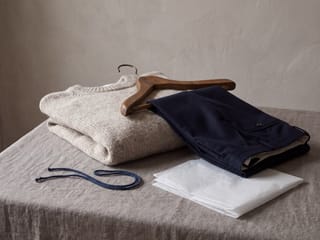
A folded knit and navy trousers on a wooden hanger, on a linen cloth.

The free diagnosis

Why your ads aren’t delivering

The quiz checks your answers against the usual causes for online fashion stores and marks the ones that apply to you. These come up most.

A store owner at a desk in a small studio, looking over a chart on a laptop.
  • Your budget can't feed the event you're optimising for

    Meta learns from the one event you choose. If your budget only buys a handful of purchases a week, it can't tell a buyer from a browser, and delivery drifts to whoever is cheapest to reach.

  • Your budget is split across too many ad sets

    An ad set per collection looks organised. It also splits the little data you have, so no ad set learns. Your plan consolidates to what your budget can support.

  • Meta is claiming sales you'd have got anyway

    Advantage+ can spend on people who already buy from you. Meta's ROAS looks healthy while new customers stay flat. Your plan measures MER first: store revenue divided by total ad spend.

  • You're selling below break-even

    Once product cost, shipping, payment fees and returns come out, some sales cost more in ads than they leave you. Your plan works out your break-even cost per purchase, return rate included, before you add budget.

  • Meta's AI is changing your ads

    Automatic enhancements can crop, brighten or animate your images. In fashion that changes the colour and fit people are buying. Your plan lists what to switch off and how to check what actually runs.

  • You're taking Meta's recommendations on trust

    Applying Meta's recommendations raises its Opportunity score in Ads Manager. It doesn't raise your margin. It can even apply them for you if auto-apply is on. Your plan tests every recommendation against your MER target first.

How fashion shoppers decide
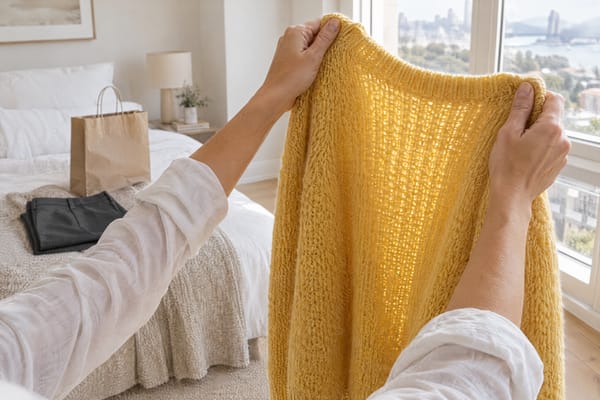
Hands holding a knit jumper up to the window light to check the fabric.
  • On sight, then on doubt. The ad stops the scroll. The product page has to answer fit, fabric, returns and price before anyone pays.
  • They think in their own size. Shoppers think “I’m usually a 10”, not in your S, M and L. If they can’t picture the piece on a body like theirs, they leave, or buy two sizes and send one back.
  • Strangers rarely buy on the first click. They see you several times. Retargeting and email close the sale.
  • Your price is compared with labels they know. If you cost more, the page has to show why: fabric, cut, print, small runs. And it has to be true.

What Meta does well for fashion, and what it does badly

Meta is good at putting a new piece in front of people like your buyers, fast; at showing shoppers the exact item they looked at; and at testing several looks cheaply.

It’s bad at selling an unknown label on one cold ad, at showing fit and fabric in a small square, and at telling you which ad made the sale when a shopper saw you five times. That last one is why your plan measures your store’s own revenue against your total ad spend every week, and treats Meta’s ROAS as a second opinion.

Read more: ROAS vs MER, explained, and what to check when Advantage+ isn’t working.

Offers that work for fashion stores

  1. Second-piece credit, or a price for two. It lifts order value, and with it the cost per purchase you can afford. Name it in every ad and remind shoppers when they add their first piece.
  2. An outfit or set price. Top and bottom, a matching set, a three-pack of basics.
  3. Free shipping just above your average order, so it nudges a second item.
  4. A new drop or early access for your list and followers. No discount needed.
  5. Free size swaps, if you offer them. It removes the biggest fear in online fashion, so say it.

Your plan picks one of these for your store and uses it in every ad. It skips deep sitewide discounts from day one, sales that never end, and “limited stock” that isn’t.

Rules your fashion ads must follow

  • Was/now and sale prices must be genuine. Australian Consumer Law applies to every price you show, in the ad and on the page.
  • Faulty goods are always covered. Your change-of-mind policy is yours to set; “no refunds” isn’t.
  • Talk about the clothes, not the viewer’s body. Meta’s personal attributes policy rejects copy that points at the person reading it.
  • Fit claims must be true. “Model is 175 cm and wears an S” only works if it’s true of a real model. Children in ads need written consent from a parent or guardian.
  • Performance and protection claims need evidence: “squat-proof”, “sweat-wicking”, UPF ratings.

Your plan covers these rules in full for your sub-type. It’s general information, not legal advice.

Other plans

Also for online fashion stores

The same free quiz checks these too, and says whether they fit your numbers before you pay.

  • Available

    Google Ads plan

    Google Shopping first, then Performance Max once your store reaches about 30 sales a month from it. Searches for your brand are kept in their own small campaign, so you can see what Google really adds.

    About the Google Ads plan
  • Available

    ChatGPT ads test plan

    Available. Your plan checks your tracking, current ads and budget first, and says wait if one isn’t ready.

    About the ChatGPT ads test plan

Real results

From real accounts

A fashion store's offer, a store that stopped splitting its budget, and the same lesson on Google Shopping. All anonymised client accounts.

From a client's account

A second-piece offer

A client's fashion store ran a second-piece offer.

A second-piece offer: Before compared with After
BeforeAfter
Ad spend A$8,190A$8,820
Average order value A$113A$139
Purchases 203235
Cost per purchase A$40.34A$37.53
ROAS 2.80x3.70x
From a client's account

Several ad sets folded into one

A client's online store consolidated several ad sets into one, at similar spend.

Several ad sets folded into one: Before compared with After
BeforeAfter
Ad spend A$6,540A$6,840
Purchases 131205
Cost per purchase A$49.92A$33.37
ROAS 2.44x3.81x
From a client's account · Google Ads

Fashion through Google Shopping

A client's fashion store ran Google Shopping.

Fashion through Google Shopping: Before compared with After
BeforeAfter
Spend A$6,570A$6,990
Purchases 164195
Average order value A$118A$142
Cost per purchase A$40.06A$35.85
ROAS 2.95x3.96x

From client accounts and our own venues and online brands, anonymised. Individual results vary. Results disclaimer

Questions

Online fashion stores: common questions

Do Facebook and Instagram ads work for small fashion brands?

They work when the basics line up: on-body creative that answers fit, an offer that lifts order value, enough budget behind one campaign for Meta to learn, and a product page that converts. Ads can't fix the product, the price or a slow page, so your plan checks those first. Nobody can promise results, and we don't.

Should a fashion store optimise for purchases or add to cart?

Purchases find better buyers, but only if your budget can reach enough of them each week for Meta to learn. Below that, your plan sets out the trade-off and picks one event for your budget as an explained decision, not a default.

How do returns change my ad targets?

A returned order is a sale your ads paid for that didn't stay. The quiz asks your return rate, and your plan builds it into your break-even maths, so your target cost per purchase is one you can actually afford.

Video or still images for fashion ads?

Lead with on-body stills: front, side and back, or three or four looks in a carousel. Activewear earns short clips of movement. Your plan gives you a shot list for your sub-type and an hour every second week to make new ads.

How much time does it take each week?

About 30 minutes a week once the one-off setup (2–3 hours) is done, plus an hour every second week making new ads. Fashion needs fresh creative more often than most businesses.

Do I need to be on Shopify?

No. The tracking steps cover Shopify, WooCommerce, BigCommerce, Wix and Squarespace, and other platforms get general steps.

Find out what’s holding your ads back.

Three minutes, free, and the diagnosis is worked out from your own answers. Your full plan is A$149 incl. GST if you want it.

Take the free 3-minute quiz

Free quiz and check-up. No card needed. Questions? Email us.